


Subtotal $0.00
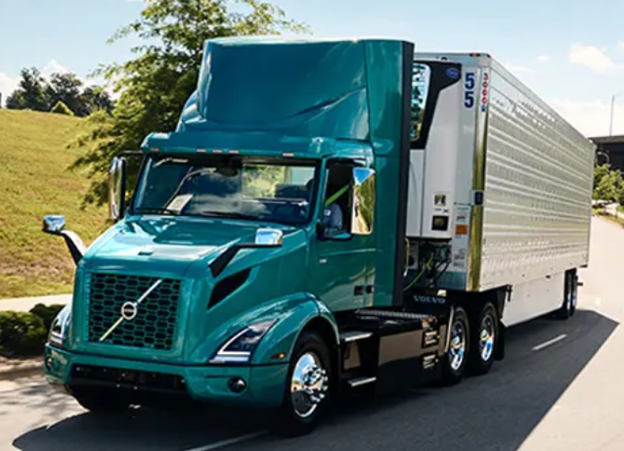
Range is the first question almost every fleet manager asks about electric trucks, and for good reason. A truck that can’t finish its route is a liability. The short answer: most Class 8 battery-electric tractors on the U.S. market advertise 150 to 300 miles per charge, and a few long-range models advertise up to about 500 miles. Real-world range is usually lower, and it moves up or down with load, weather, terrain, speed and driving style.
This guide explains where range numbers come from, what changes them, and how to figure out whether an electric semi can run your routes.
Advertised Range of Current Class 8 Electric Trucks
The table below reflects manufacturer-advertised figures at launch. Treat them as a starting point, not a promise.
| Truck | Battery (kWh) | Advertised range |
|---|---|---|
| Freightliner eCascadia | Up to 438 | 155–230 miles |
| Volvo VNR Electric | 375 or 565 | Up to 275 miles |
| Tesla Semi | Not published | Up to 500 miles (est.) |
| Peterbilt 579EV | 400 | Up to 150 miles |
| Kenworth T680E | 396 | Up to 150 miles |
| Lion8 Tractor | 630 | Up to 275 miles |
Specifications change with new model years, and manufacturers are introducing longer-range versions. Confirm current specs with your dealer and see our Compare Class 8 EVs page. Note that Lion Electric restructured after entering creditor protection in December 2024, so check on availability, parts and service before considering the Lion8.
The Simple Math Behind Range
Range comes down to two numbers:
Range (miles) = usable battery energy (kWh) ÷ energy use (kWh per mile)
Class 8 electric tractors hauling freight commonly use around 1.7 to 2.5 kWh per mile, depending on weight, speed, terrain and weather. A few examples:
| Usable battery | At 1.8 kWh/mile | At 2.2 kWh/mile | At 2.6 kWh/mile |
|---|---|---|---|
| 350 kWh | ~194 miles | ~159 miles | ~135 miles |
| 450 kWh | ~250 miles | ~205 miles | ~173 miles |
| 550 kWh | ~306 miles | ~250 miles | ~212 miles |
Keep in mind that usable capacity is usually less than the battery’s total (“nameplate”) capacity, because manufacturers reserve a buffer to protect battery life. And fleets rarely plan to drive a battery from 100% down to 0%. A reserve of 10% to 20% is common.
What Reduces (or Extends) Real-World Range
Payload and gross weight
A truck at 80,000 pounds needs more energy per mile than one running light. Empty backhauls and partial loads extend range.
Speed
Aerodynamic drag rises sharply with speed. Running at 65 mph instead of 55 mph can noticeably increase energy use per mile. Highway-heavy routes generally use more energy per mile than urban routes, the opposite of the typical diesel pattern.
Terrain
Climbing grades takes significant energy. Electric trucks recover part of it through regenerative braking on the way down, but not all of it. Mountainous routes need extra margin.
Weather and cab heating
Cold weather is one of the biggest range factors. Batteries are less efficient when cold, and heating the cab and battery draws energy that would otherwise move the truck. Fleets in cold climates commonly plan for a meaningful winter range loss. Hot weather matters too, because air conditioning and battery cooling draw power. Pre-conditioning the cab and battery while still plugged in, and parking indoors where possible, helps.
Stop-and-go driving
This one helps electric trucks. Frequent stops let regenerative braking recapture energy, which is why urban delivery and drayage are strong fits.
Driver behavior
Smooth acceleration, anticipating stops and using regenerative braking well can make a measurable difference. Driver coaching is one of the cheapest ways to extend range.
Battery aging
Like all lithium-ion batteries, truck packs lose some capacity over years of use. Ask manufacturers what capacity their battery warranty guarantees and for how long, and build that decline into long-term planning.
Range Is Only Half the Story: Charging Changes the Math
Range per charge isn’t the same as miles per day. A truck that charges during a loading dock wait, a lunch break or a driver change can cover far more than its single-charge range.
- Depot charging overnight resets the truck to full for each shift.
- Opportunity charging during the day, at the depot or a customer site, adds miles.
- Fast and megawatt charging during a required rest break can add hundreds of miles. Tesla has reported Semi deliveries covering well over 500 miles in a day with charging stops, and the emerging Megawatt Charging System (MCS) is designed to make that practical across manufacturers. See What Is Megawatt Charging?.
In NACFE’s Run on Less – Electric DEPOT study, 10 fleet depots with 294 battery-electric trucks logged 446,831 miles over about three weeks, and the study noted that range can be extended with multiple charges per shift at the depot and en route.
How to Tell If an Electric Semi Can Run Your Routes
- Pull your telematics. Look at several months of data, not averages. You need the longest days, not the typical day.
- Note route conditions. Highway share, grades, typical speeds and gross weights.
- Account for seasons. Use your coldest and hottest months as the planning case.
- Add a reserve. Plan for arriving back with 10%–20% charge remaining, plus battery aging over the years you’ll own the truck.
- Map your dwell time. Where does the truck sit for 30 minutes or more? Each stop is a possible charging window.
- Ask for proof. Request real-world energy use (kWh/mile) from fleets running similar duty cycles, not just advertised range.
- Pilot first. Run one or two trucks on your toughest qualifying routes before a larger order.
A route that runs 150 miles a day with a 12-hour overnight dwell is an easy fit for almost any current electric tractor. A 400-mile daily route with tight turnarounds is a much harder case that may require a long-range model, mid-day fast charging or both.
The Bottom Line
Most Class 8 electric trucks can reliably cover 150 to 250 real-world miles on a charge, and long-range models can do more. That already covers a large share of regional, drayage and return-to-base routes. With planned charging during the workday, daily mileage can exceed single-charge range. The key is planning from your worst-case day, not the brochure’s best case.
Frequently Asked Questions
What is the longest-range electric semi-truck?
Among models sold in the U.S., the Tesla Semi has the longest advertised range, at up to 500 miles (Tesla estimate). Other manufacturers are introducing longer-range models, so check current specs.
How much range does an electric truck lose in winter?
It varies by truck, temperature and use of cab heat, but cold-climate fleets commonly plan for a meaningful winter loss. Pre-conditioning while plugged in reduces it.
Can an electric semi do long-haul trucking?
Some long-range models with fast or megawatt charging can, but long-haul remains the hardest use case today because of limited public truck charging.
How many kWh per mile does an electric semi use?
Loaded Class 8 electric tractors commonly use about 1.7 to 2.5 kWh per mile depending on weight, speed, terrain and weather.
Sources and Further Reading
- ZEV Help, Compare Class 8 EVs and Operating ZEV Trucks
- NACFE, Run on Less – Electric DEPOT: nacfe.org/research/run-on-less-electric-depot
- Manufacturer specification pages for each model listed (verify current figures)
ZEVhelp.com is an independent, technology-neutral educational resource. This article is for general information only and is not legal, tax or financial advice. Regulations and incentives change often; for official rules, refer to EPA.gov, ARB.CA.gov and your state agencies. Last reviewed October 2026.

Comments are closed