


Subtotal $0.00
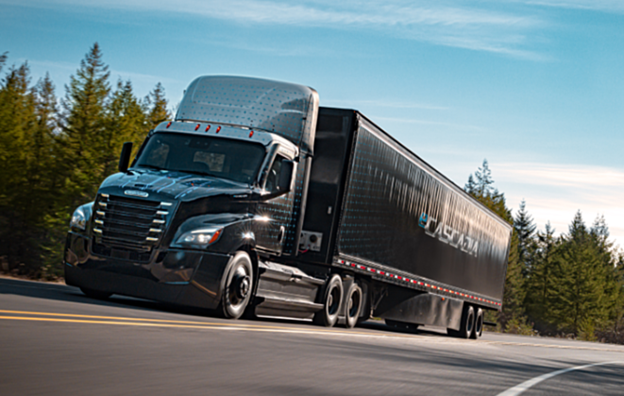
A zero-emission truck is a commercial vehicle that produces no tailpipe exhaust while it operates. No diesel particulate, no nitrogen oxides (NOx), no carbon dioxide (CO₂) out of a stack or exhaust pipe. Today, that means one of two technologies: a battery-electric truck that runs on electricity stored in an onboard battery, or a hydrogen fuel cell truck that makes its own electricity from hydrogen and releases only water vapor.
If you run a fleet, you’ll hear the term in sales pitches, regulations, customer sustainability requests and grant applications. This guide explains what the term actually means, which vehicles qualify, how they work and what they mean for a trucking operation, without the marketing.
The Short Definition
Regulators and the industry generally define a zero-emission vehicle (ZEV) by one test: does the vehicle emit any exhaust pollutants or greenhouse gases from its onboard source of power under any operating condition? If the answer is no, it is a ZEV.
That rules out a few vehicles that often get lumped in with “clean trucks”:
- Hybrid trucks still burn diesel or gasoline, even if they burn less of it.
- Plug-in hybrid and range-extended trucks can drive some miles on battery power, but they have an engine that runs on fuel. California regulators call some of these “near-zero-emission vehicles” (NZEVs), not ZEVs.
- Natural gas and renewable natural gas (RNG) trucks can sharply cut NOx and lifecycle carbon, but they still have a tailpipe.
- Hydrogen combustion engine trucks burn hydrogen in a modified engine. They emit almost no CO₂ but still produce some NOx, so they are generally not treated as zero-emission.
These “bridge technologies” can make sense for some fleets, and we cover them separately on our Bridge Technologies page. But they are not zero-emission trucks.
The Two Types of Zero-Emission Trucks
Battery-Electric Trucks (BEVs)
A battery-electric truck replaces the engine, transmission, fuel tanks and exhaust aftertreatment with a large lithium-ion battery pack, one or more electric motors and power electronics. You “refuel” by plugging into a charger, usually at your own depot overnight or between shifts.
Key traits:
- Energy source: electricity from the grid (or on-site solar and storage).
- Battery size: Class 8 tractors on the U.S. market today typically carry roughly 400 to 600+ kWh of battery capacity.
- Range: most current Class 8 models advertise 150 to 300 miles per charge, with a few long-range models advertising up to 500 miles. Real-world range depends on load, terrain, speed, weather and driver habits.
- Efficiency: electric motors convert most of the battery’s energy into motion, and regenerative braking recovers energy when slowing down or descending grades.
- Best fit today: return-to-base work with predictable daily miles, such as drayage, regional distribution, local pickup and delivery, and refuse.
Battery-electric trucks make up the large majority of zero-emission trucks in service in North America. Learn more on our How Battery-Electric Trucks Work page.
Hydrogen Fuel Cell Electric Trucks (FCEVs)
A fuel cell truck is also an electric truck: electric motors turn the wheels. The difference is where the electricity comes from. A fuel cell stack combines hydrogen stored in high-pressure tanks with oxygen from the air, producing electricity, heat and water. A smaller battery buffers power and captures regenerative braking.
Key traits:
- Energy source: compressed hydrogen gas, refueled at a hydrogen station.
- Refueling time: closer to diesel than to battery charging, when a working station is available.
- Range potential: comparable to or longer than many battery-electric models, with less weight penalty from batteries.
- Current reality: heavy-duty hydrogen stations are scarce and concentrated mainly in California, and retail hydrogen prices have been well above the level needed to compete with diesel on cost per mile. Two of the best-known U.S. startups, Nikola and Hyzon, ceased normal operations in early 2025.
Established manufacturers, including Hyundai, Toyota, Honda and Daimler Truck, continue to develop fuel cell trucks, mostly aimed at larger-scale availability later in the decade. See our Hydrogen Trucks Reality Check for an honest look at where the technology stands.
Battery-Electric vs. Fuel Cell at a Glance
| Feature | Battery-Electric | Hydrogen Fuel Cell |
|---|---|---|
| Tailpipe emissions | None | Water vapor only |
| How it’s fueled | Plug-in charging | Hydrogen refueling station |
| Typical refuel/recharge time | 1–3+ hours on DC fast charge; overnight on depot charging | Roughly 15–30 minutes for heavy-duty when stations work |
| Infrastructure availability | Depot charging is buildable now; public truck charging is limited but growing | Very limited heavy-duty stations, mostly in California |
| Energy cost per mile | Often lower than diesel with depot charging | Currently higher than diesel in most markets |
| Market maturity | Multiple models from major OEMs in production | Limited production and pilot deployments |
What “Zero-Emission” Does and Doesn’t Mean
“Zero-emission” refers to the vehicle’s tailpipe, not to every step in its life. A fair picture includes:
- Upstream emissions. Electricity can come from coal, natural gas, nuclear, hydro, wind or solar. Hydrogen can be made from natural gas or from water using electricity. A battery-electric truck charged on a clean grid has a very low carbon footprint; one charged on a coal-heavy grid has a larger one. Most lifecycle studies still find that battery-electric trucks produce fewer greenhouse gas emissions than diesel over their lifetimes in the U.S., and the gap widens as grids get cleaner.
- Manufacturing. Building a large battery has a carbon cost up front, which is paid back over the vehicle’s working life.
- Non-exhaust particulates. All trucks shed particles from tires and road wear. Electric trucks reduce brake dust because regenerative braking does much of the slowing.
What zero-emission trucks clearly do is eliminate local exhaust pollution: diesel particulate matter and NOx at ports, warehouses, distribution centers and neighborhoods along freight corridors. That local air-quality benefit is a major reason regulators, ports and large shippers have pushed for them.
Which Truck Classes Can Be Zero-Emission?
Zero-emission technology now exists in every commercial weight class, though maturity varies:
| Class | GVWR | Examples | ZEV maturity |
|---|---|---|---|
| 2b–3 | 8,501–14,000 lb | Cargo vans, large pickups | Widely available |
| 4–6 | 14,001–26,000 lb | Step vans, box trucks, shuttle buses | Available from several makers |
| 7 | 26,001–33,000 lb | Medium straight trucks, school buses | Available, especially school buses |
| 8 | 33,001 lb and up | Day cab and sleeper tractors, refuse trucks, transit buses | Growing; day cabs lead, long-haul sleepers emerging |
Browse current options on our Zero-Emission Truck Models and Compare Class 8 EVs pages.
Why Fleets Are Paying Attention
Even with federal and California mandates in flux as of 2026, fleets keep evaluating zero-emission trucks for practical reasons:
- Customer requirements. Large shippers and retailers increasingly ask carriers to report and reduce emissions.
- Ports and local rules. Ports and some air districts favor or reward zero-emission equipment.
- Operating costs. Depot-charged electricity can cost less per mile than diesel, and electric drivetrains have fewer fluids and parts to service.
- Driver experience. Drivers often report quieter cabs, less vibration and strong low-speed torque.
- Future-proofing. Trucks bought today will run for 10 or more years, through whatever rules come next.
There are also real headwinds: higher purchase prices, the 12% federal excise tax applied to a higher price, the end of the federal 45W commercial clean vehicle tax credit, utility power lead times, limited public truck charging and an untested resale market. We cover these honestly in our Headwinds analysis.
The Bottom Line
A zero-emission truck has no tailpipe emissions. In practice, that means either a battery-electric truck or a hydrogen fuel cell truck. Battery-electric trucks are the most mature option today and work best on predictable, return-to-base routes. Hydrogen trucks promise longer range and faster refueling but are held back by fuel cost and station availability.
Whether one fits your fleet depends on your routes, duty cycles, power availability and economics, not on the label. Start with our TCO Calculator and Fleet Charging Guide to see how the numbers look for your operation.
Frequently Asked Questions
Is a hybrid truck a zero-emission truck?
No. Hybrids, including plug-in hybrids, have an engine that burns fuel and produces exhaust. Only battery-electric and hydrogen fuel cell trucks are zero-emission.
Are zero-emission trucks really “zero” emissions?
They have zero tailpipe emissions. Generating the electricity or hydrogen they use and manufacturing the vehicle create emissions upstream, but most lifecycle studies find lower total greenhouse gas emissions than diesel, especially on cleaner grids.
Can a zero-emission truck pull a full 80,000-pound load?
Yes, many Class 8 electric tractors are rated for 82,000 pounds gross combination weight, and federal law allows electric trucks up to 2,000 extra pounds on the Interstate system to offset battery weight. See How Much Does an Electric Semi-Truck Weigh? for details.
Is the government requiring fleets to buy zero-emission trucks?
For most private fleets, not as of October 2026. See our article Are Trucking Companies Required to Purchase Electric Trucks? and our 2026 Regulation Tracker for the current picture.
Sources and Further Reading
- California Air Resources Board, Advanced Clean Trucks and Advanced Clean Fleets program pages: ww2.arb.ca.gov
- U.S. Department of Energy, Alternative Fuels Data Center: afdc.energy.gov
- North American Council for Freight Efficiency (NACFE), Run on Less – Electric DEPOT: nacfe.org
- ZEV Help, 2026 Regulation Tracker
ZEVhelp.com is an independent, technology-neutral educational resource. This article is for general information only and is not legal, tax or financial advice. Regulations and incentives change often; for official rules, refer to EPA.gov, ARB.CA.gov and your state agencies. Last reviewed October 2026.

Comments are closed