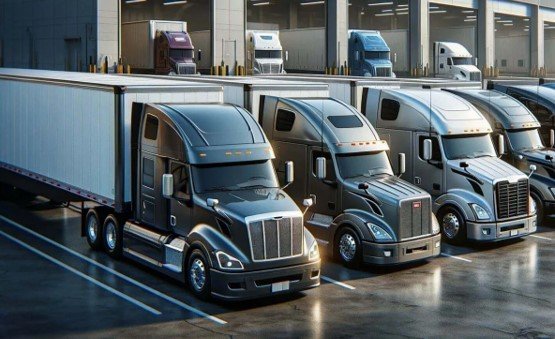
Zero-emission commercial vehicles attract strong opinions on every side. This page tests common claims, both the overly optimistic ones and the overly pessimistic ones, against what fleets and public data actually show. The honest answer to most questions is “it depends on the duty cycle.”
Verdict: Myth for many routes, true for some. Battery-electric Class 8 tractors on the market today advertise roughly 150 to 275 miles per charge, and delivery vans and school buses are built for shorter daily routes. Many local and regional routes, such as drayage, food distribution, and last-mile delivery, return to a depot every night and fit within that range. Long-haul routes of 500 miles or more a day are still a poor fit for most battery-electric trucks today.
What it means: start with your actual route data. The longest day matters more than the average day. See Class 8 Electric Vehicles and Vehicles by Type.
Verdict: Myth. Real-world range depends on payload, speed, terrain, weather, and driver habits. Cold weather can cut range noticeably because the battery and cab need heating. Plan with a buffer below the advertised figure.
Verdict: Partly true. Batteries add weight, which can reduce payload for weight-sensitive freight. Federal law gives battery-electric and natural gas trucks up to 2,000 extra pounds of gross weight on Interstates to offset heavier powertrains, and state rules vary. Most freight “cubes out” (fills the trailer) before it “weighs out,” so the penalty matters most for heavy loads like bulk materials.
Verdict: Partly true. Extreme temperatures reduce range and can slow charging. Fleets in cold and hot climates do run electric trucks and buses successfully, but they plan for it with preconditioning while plugged in, indoor or covered parking, and extra range margin.
Verdict: Partly true. Purchase prices for battery-electric and fuel cell trucks are still much higher than diesel. Over the life of the vehicle, lower energy and maintenance costs can close some or all of that gap, depending on electricity rates, miles driven, incentives, and resale value. In some cases diesel remains cheaper overall.
What it means: compare total cost of ownership, not sticker price. Try the TCO Calculator.
Verdict: Partly true. Charging at a depot overnight on a good commercial rate is usually cheaper per mile than diesel. Public fast charging and utility demand charges, which bill for your highest power draw in a month, can erase that advantage. Charging schedules and rate plans matter a lot.
Verdict: Myth. Electric drivetrains have fewer moving parts, no oil changes, and regenerative braking reduces brake wear. But tires, suspension, cooling systems, and high-voltage components still need service, and technicians need specialized training and equipment.
Verdict: Myth. Incentives can reduce costs significantly, but programs change, run out of funding, and come with requirements. Several federal incentives were changed or ended in 2025. Check current status before counting on any program: see Incentives in 2026.
Verdict: Partly true. Public charging that can fit a tractor-trailer is still limited, but it is growing, and most commercial electric vehicles today charge at their own depots. See the Truck Charging Map for current public locations.
Verdict: Myth. A handful of vans might work on existing service, but a fleet of trucks usually needs new electrical capacity. Utility upgrades can take many months to several years, so planning should start early. Use the Depot Charging Calculator to estimate power needs.
Verdict: Partly true locally. Nationally, truck charging is a small share of electricity demand today. Locally, a large depot can need as much power as a small factory, and the nearest substation may not have room. The constraint is usually local distribution capacity and lead time, not total generation.
Verdict: Unproven. Fuel cell trucks offer faster refueling and longer range, which suits some long-haul and heavy-duty work. Today, hydrogen fueling stations for trucks are scarce and hydrogen fuel is expensive. Both technologies may have a role. See Hydrogen Trucks: Reality Check.
Verdict: Myth. Battery-electric heavy trucks are already working in drayage, regional delivery, and refuse service. Their limits are real for long-haul routes and very heavy loads, but they are not limited to light vehicles.
Verdict: Myth. Renewable diesel, natural gas, hybrids, and new low-NOx diesel engines can all cut emissions with fewer operational changes. They are legitimate options for some fleets. See Bridge Technologies.
Verdict: Myth. Commercial battery packs lose capacity gradually over time and use. Manufacturers offer multi-year battery warranties, and terms vary, so read them carefully. Fast charging and extreme heat can speed up wear.
Verdict: Partly true. Charging does create emissions where electricity is generated, and battery manufacturing has its own footprint. Most lifecycle studies still find lower total greenhouse gas emissions for battery-electric trucks on the U.S. grid, and the advantage depends on the local power mix. Zero tailpipe emissions also mean cleaner air at ports, depots, and school pickup lines.
Verdict: Mostly myth. Vehicle fires of any type are uncommon. Battery fires behave differently from fuel fires: they can be harder to extinguish and can reignite, so first responders and depot staff need specific training and procedures.
Verdict: Myth. Federal and California rules changed sharply in 2025 and 2026, and several are tied up in court. Some state programs, incentives, local rules, and customer requirements still apply. The landscape is unsettled, not empty. See the 2026 Regulation Tracker.
Verdict: Myth. There is no current nationwide purchase mandate for fleets. Requirements that do exist depend on where you operate, what kind of fleet you are, and how ongoing legal challenges are resolved.
Last reviewed: October 2026