


Subtotal $0.00
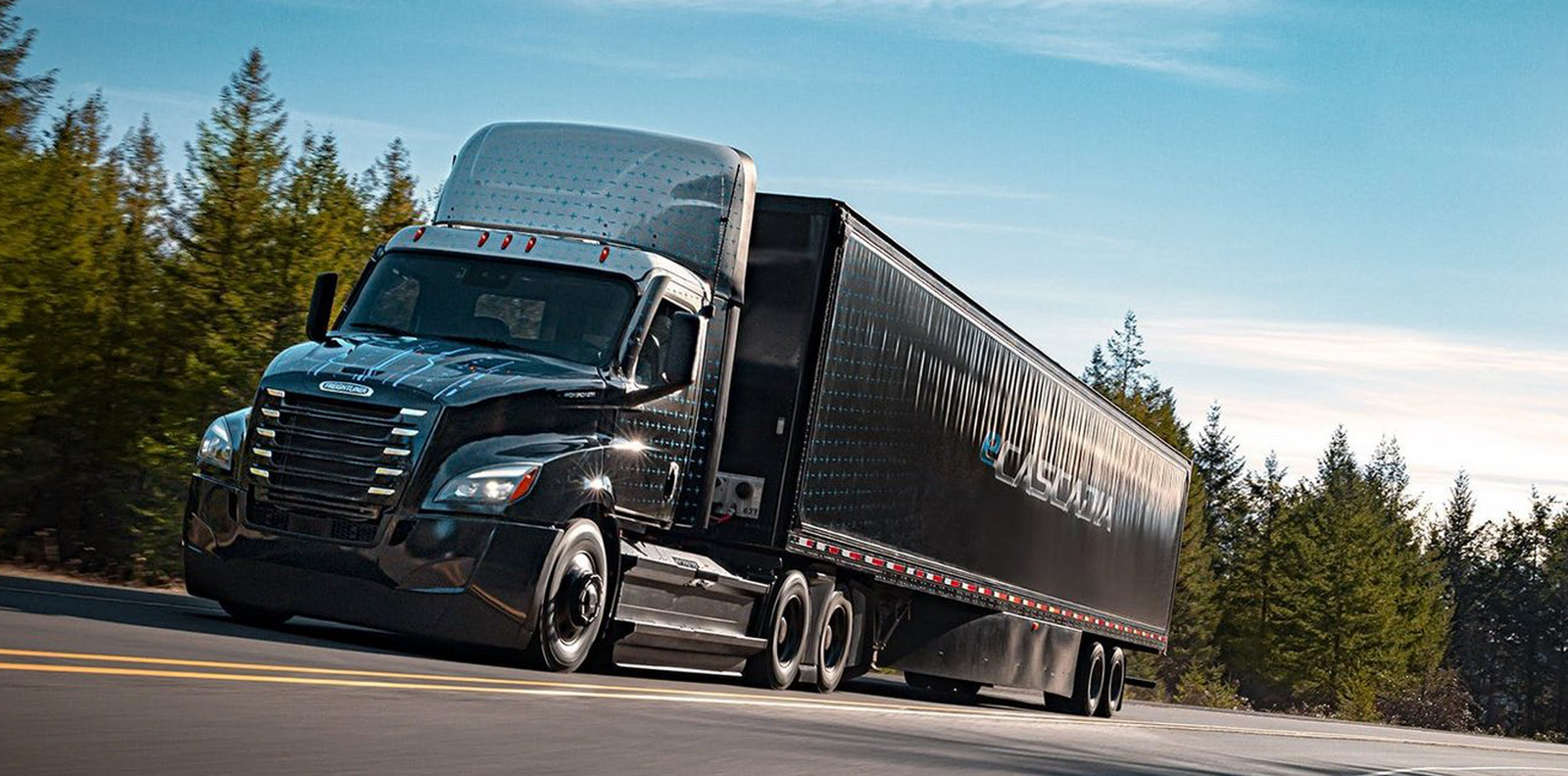
An electric semi-truck costs far more to buy than a diesel, and can cost less to run. Whether it saves money overall depends on how many miles it runs, what you pay for electricity, what incentives you can get and what the truck is worth when you sell it. That’s what total cost of ownership (TCO) measures: every dollar you spend on a truck over the years you own it, minus what you get back at the end.
This guide walks through each cost category, then runs two worked examples so you can see which assumptions decide the outcome. Plug your own numbers into our TCO Calculator.
What Goes Into Total Cost of Ownership
| Cost category | Diesel | Battery-Electric |
|---|---|---|
| Purchase price | Lower | Much higher, often 2x or more for Class 8 |
| Federal excise tax (12%) | Applies | Applies, on a higher price |
| Incentives | Few | State vouchers, utility programs (federal 45W credit ended) |
| Fueling infrastructure | Usually none | Depot chargers, installation, utility upgrades |
| Energy cost per mile | Diesel price ÷ mpg | Electricity price × kWh/mile, including demand charges |
| Maintenance | Oil, filters, aftertreatment (DPF, DEF, SCR), more brake wear | No oil or aftertreatment; less brake wear; tires, HVAC, software |
| Resale value | Established used market | Uncertain; young used market |
| Insurance | Established | Often higher due to higher vehicle value |
Breaking Down Each Cost
Purchase price and the 12% federal excise tax
Class 8 battery-electric tractors have commonly been priced at roughly two to three times a comparable diesel. The 12% federal excise tax on new heavy trucks applies to zero-emission models too, which widens the dollar gap because the tax is a percentage of a higher price. Prices are falling as production scales, and some newer models are aimed at much lower price points. Get current quotes.
Incentives (2026 status)
Federal support shrank sharply in 2025:
- The Commercial Clean Vehicle Credit (45W), worth up to $40,000 per heavy-duty truck, is not available for vehicles acquired after September 30, 2025.
- The Alternative Fuel Refueling Property Credit (30C) for chargers is not available for property placed in service after June 30, 2026.
State and local programs remain the main source of help: California’s HVIP point-of-sale vouchers, New York’s NYTVIP, New Jersey’s NJ ZIP, Massachusetts’ MOR-EV Trucks, air district grants, VW settlement funds and utility make-ready programs that cover wiring up to the charger. Funding opens and closes in rounds. See our 2026 Incentives page.
Charging infrastructure
Depot charging is usually the cheapest way to fuel an electric truck, but it requires up-front spending on chargers, installation, electrical upgrades and sometimes utility service upgrades. Costs vary widely by site. Bringing new power to a depot routinely takes one to three years. Utility make-ready programs and charging-as-a-service providers can reduce or spread these costs. Size it with our Depot Charging Calculator.
Energy cost per mile
This is where electric trucks can win.
- Diesel: At $3.80 per gallon and 6.5 mpg, fuel costs about $0.58 per mile.
- Electric: At 2.0 kWh per mile plus 10% charging losses (2.2 kWh from the grid), every $0.01 per kWh adds about $0.022 per mile:
| All-in electricity price | Cost per mile |
|---|---|
| $0.12/kWh (good depot rate, managed charging) | ~$0.26 |
| $0.18/kWh (typical commercial depot) | ~$0.40 |
| $0.30/kWh (high demand charges) | ~$0.66 |
| $0.50/kWh (public fast charging) | ~$1.10 |
The lesson: electric trucks save on fuel only if most charging happens at a reasonable depot rate. Demand charges, which are based on your highest power draw in a billing period, can push the effective rate up sharply if trucks fast-charge at the same time. Managed charging, time-of-use rates and on-site storage help control them.
Maintenance
Electric drivetrains have no oil changes, no diesel particulate filter, no DEF system and less brake wear thanks to regenerative braking. Diesel tractor maintenance and repair has run roughly $0.20 per mile in recent industry cost surveys. Many fleets expect electric trucks to cost less to maintain, but real-world data is still limited, and tires, suspension, HVAC, cooling systems and software still need service. Budget for technician training, high-voltage safety equipment and possible shop upgrades.
Resale value
The used electric truck market is young, so resale values are uncertain. Battery health, warranty transferability and technology improvements will drive values. Use conservative assumptions, or consider leasing to shift residual-value risk to the lessor.
Worked Example A: A Typical 2026 Regional Tractor
Assumptions: 80,000 miles per year for 5 years (400,000 miles); diesel tractor $185,000 and 6.5 mpg at $3.80 per gallon; electric tractor $420,000 using 2.2 kWh per mile from the grid at $0.18 per kWh; one depot charger per truck at $100,000 installed; maintenance $0.20 per mile diesel and $0.15 per mile electric; resale 30% diesel and 20% electric. Purchase prices include excise tax. Figures are illustrative and not discounted for the time value of money.
| 5-year cost | Diesel | Electric (no voucher) | Electric ($120,000 voucher) |
|---|---|---|---|
| Truck (incl. FET) | $185,000 | $420,000 | $420,000 |
| Incentive | $0 | $0 | –$120,000 |
| Charger and install | $0 | $100,000 | $100,000 |
| Fuel/energy | $233,846 | $158,400 | $158,400 |
| Maintenance | $80,000 | $60,000 | $60,000 |
| Resale value | –$55,500 | –$84,000 | –$84,000 |
| Total cost of ownership | $443,346 | $654,400 | $534,400 |
| Difference vs. diesel | — | +$211,054 | +$91,054 |
In this scenario, the electric truck saves about $95,000 on fuel and maintenance over five years, but that isn’t enough to overcome its higher purchase price and charger cost, even with a sizable voucher.
Worked Example B: A Favorable Case
Assumptions changed: 120,000 miles per year (600,000 over 5 years); diesel at $4.25 per gallon; electric tractor priced at $300,000; managed depot charging at $0.12 per kWh; charger cost $60,000 per truck (shared or utility-supported); electric resale 20% of $300,000. Everything else is the same.
| 5-year cost | Diesel | Electric (no voucher) | Electric ($120,000 voucher) |
|---|---|---|---|
| Truck (incl. FET) | $185,000 | $300,000 | $300,000 |
| Incentive | $0 | $0 | –$120,000 |
| Charger and install | $0 | $60,000 | $60,000 |
| Fuel/energy | $392,308 | $158,400 | $158,400 |
| Maintenance | $120,000 | $90,000 | $90,000 |
| Resale value | –$55,500 | –$60,000 | –$60,000 |
| Total cost of ownership | $641,808 | $548,400 | $428,400 |
| Difference vs. diesel | — | –$93,408 | –$213,408 |
Here the electric truck comes out ahead even without a voucher, because high mileage multiplies the per-mile savings and the purchase price gap is smaller.
What Decides the Outcome
The two examples show which levers matter most:
- Annual miles. More miles means more fuel savings to pay back the higher purchase price. Low-mileage trucks struggle to break even.
- Purchase price. The gap between electric and diesel prices is the biggest single cost.
- Electricity price and demand charges. Cheap, managed depot charging is essential. Relying on public fast charging can erase fuel savings.
- Incentives. A state voucher can swing the result by six figures.
- Diesel price. Higher diesel prices favor electric.
- Charger cost per truck. Sharing chargers across shifts and utility make-ready support lower this.
- Resale value. The biggest unknown. Be conservative.
Costs That Are Hard to Put a Number On
- Payload loss on heavy loads due to battery weight.
- Downtime if charging or service networks are limited.
- Customer value if shippers pay more for, or award lanes based on, zero-emission service.
- Regulatory risk in either direction.
- Financing costs and the time value of money (our examples don’t discount future costs).
The Bottom Line
In 2026, with the federal 45W credit gone, a battery-electric Class 8 tractor beats diesel on total cost of ownership only under favorable conditions: high annual mileage, low depot electricity costs, a lower purchase price and, often, state incentives. For many fleets, the numbers don’t work yet on every route, but they can work on the right ones. Run your own numbers with real quotes, real utility rates and your actual duty cycles before you buy.
Frequently Asked Questions
Is an electric semi cheaper to operate than a diesel?
Per mile, often yes, if you charge mostly at your depot at a reasonable rate. Purchase and infrastructure costs are higher, so total cost of ownership depends on your situation.
How much does it cost to charge an electric semi?
At 2.0 kWh per mile plus charging losses, roughly $0.26 per mile at $0.12/kWh and $0.40 per mile at $0.18/kWh. A full charge of a 500 kWh pack at $0.18/kWh costs about $90 to $100 including losses.
Does the federal excise tax apply to electric trucks?
Yes. The 12% federal excise tax applies to new heavy trucks regardless of fuel type.
Is the federal electric truck tax credit still available?
No. The 45W Commercial Clean Vehicle Credit is not available for vehicles acquired after September 30, 2025.
Sources and Further Reading
- ZEV Help, TCO Calculator, 2026 Incentives and Depot Charging Calculator
- American Transportation Research Institute (ATRI), An Analysis of the Operational Costs of Trucking: truckingresearch.org
- NACFE, Run on Less – Electric DEPOT: nacfe.org
- Internal Revenue Service, Commercial Clean Vehicle Credit (45W): www.irs.gov
ZEVhelp.com is an independent, technology-neutral educational resource. This article is for general information only and is not legal, tax or financial advice. Regulations and incentives change often; for official rules, refer to EPA.gov, ARB.CA.gov and your state agencies. Last reviewed October 2026.

Comments are closed